
DENALI NATIONAL PARK
Today is the day we have been looking forward to for many years, our planned visit to Denali National Park. This is the main reason we decided to do a land tour/cruise in Alaska. Can you say Excitement?
Fairbanks to Denali National Park
 We started our day aboard our motorcoach from the Wedgewood Resort in Fairbanks bound for a day aboard the Wil
 derness express. If that sounds like an old fashioned train, it wasn’t. What a train this was! Beautiful scenery and breathtaking views that surrounded us compliments of the domed trains. The seats were equivalent of first class type seats on an airplane – Can
  you say COMFORT??? Fantastic breakfast aboard the train – fresh, reasonable and excellent service. Chance to rest up before a very busy day. We arrived at the Denali Visitors center about noon.
Today is the day we have been looking forward to for many years, our planned visit to Denali National Park. This is the main reason we decided to do a land tour/cruise in Alaska. Can you say Excitement?
Fairbanks to Denali National Park
 We started our day aboard our motorcoach from the Wedgewood Resort in Fairbanks bound for a day aboard the Wil
 derness express. If that sounds like an old fashioned train, it wasn’t. What a train this was! Beautiful scenery and breathtaking views that surrounded us compliments of the domed trains. The seats were equivalent of first class type seats on an airplane – Can
  you say COMFORT??? Fantastic breakfast aboard the train – fresh, reasonable and excellent service. Chance to rest up before a very busy day. We arrived at the Denali Visitors center about noon.
 The sites along the train ride were fantastic.
 That water may look a bit gray. The gray is silt from the many glaciers where these rivers originate.
Denali National Park
 We visited the park’s visitors center then boarded the park Tundra Wilderness Tour bus for a 124 mile round trip tour of Denali. Upon b
 oarding the bus we received a box lunch to eat on board since we were in for a very long tour, driving 62 miles into the park and stopping all along the way for potty breaks as well as our primary objective which was to photograph the animals. Our tour director, Christina and our Tundra Wilderness Tour bus driver took us for a very detailed exploration through Denali.
 We visited the park’s visitors center then boarded the park Tundra Wilderness Tour bus for a 124 mile round trip tour of Denali. Upon b
 oarding the bus we received a box lunch to eat on board since we were in for a very long tour, driving 62 miles into the park and stopping all along the way for potty breaks as well as our primary objective which was to photograph the animals. Our tour director, Christina and our Tundra Wilderness Tour bus driver took us for a very detailed exploration through Denali.
 Talk about animals in their own habitat, we saw: Dall Sheep,
  Caribou,
  Grizzly Bears (believe it or not, they were blonde),
  a Wolf
 and a Moose up close and personal.

A major citing was Mount McKinley or Denali. This is the highest mountain peak on the North American Continent. We actually saw it twice during the day. It is usually shrouded in clouds and we were told early on that if we saw Denali, it was unlikely that we would see many animals and vice versa. Well, they were wrong since we were blessed to see both. The park's scenery was spectacular.
 The only negative is that the bus was a school bus type vehicle with seats very close together. The bus driver was extremely knowledgeable and observant. She spotted many animals and focused her video camera on them.
  This was then put on the bus’ video system so that we all could see and focus in on the animals. I'm 6'5" and the "School Bus" had no legroom. If you are tall, you really have to get on early and try to pick your emergency exit row seat.
Grande Denali Lodge
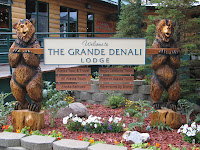
The Grande Denali Lodge was yet another great Alaskan wilderness hotel. Perched on a hill over looking the town, we arrived back at the lodge close to 9 p.m. and were escorted to our room where we quickly freshened up and decided we needed a really nice late night dinner. Neither of us had eaten much of the box lunch which was just o.k. Talk about good food, we had a delicious dinner - Yvonne feasted on Halibut, one of her favorite meals in Alaska, while we enjoyed a beautiful view sitting high above the town. As we did wherever we went, we met some very nice folks here too.
One of the memorable Alaskan cultural exhibits we saw was just outside the lodge. It was called an Inukshuk. These stone figures known as inuksuit can be found throughout the world. Inukshuk, the singular of inuksuit, means "in the likeness of a human" in the Inuit language. They are monuments made of unworked stones that are used by the Inuit for communication and survival. The traditional meaning of the inukshuk is "Someone was here" or "You are on the right path." We sure did recognize that, we were definitely on the right path.
One of the memorable Alaskan cultural exhibits we saw was just outside the lodge. It was called an Inukshuk. These stone figures known as inuksuit can be found throughout the world.
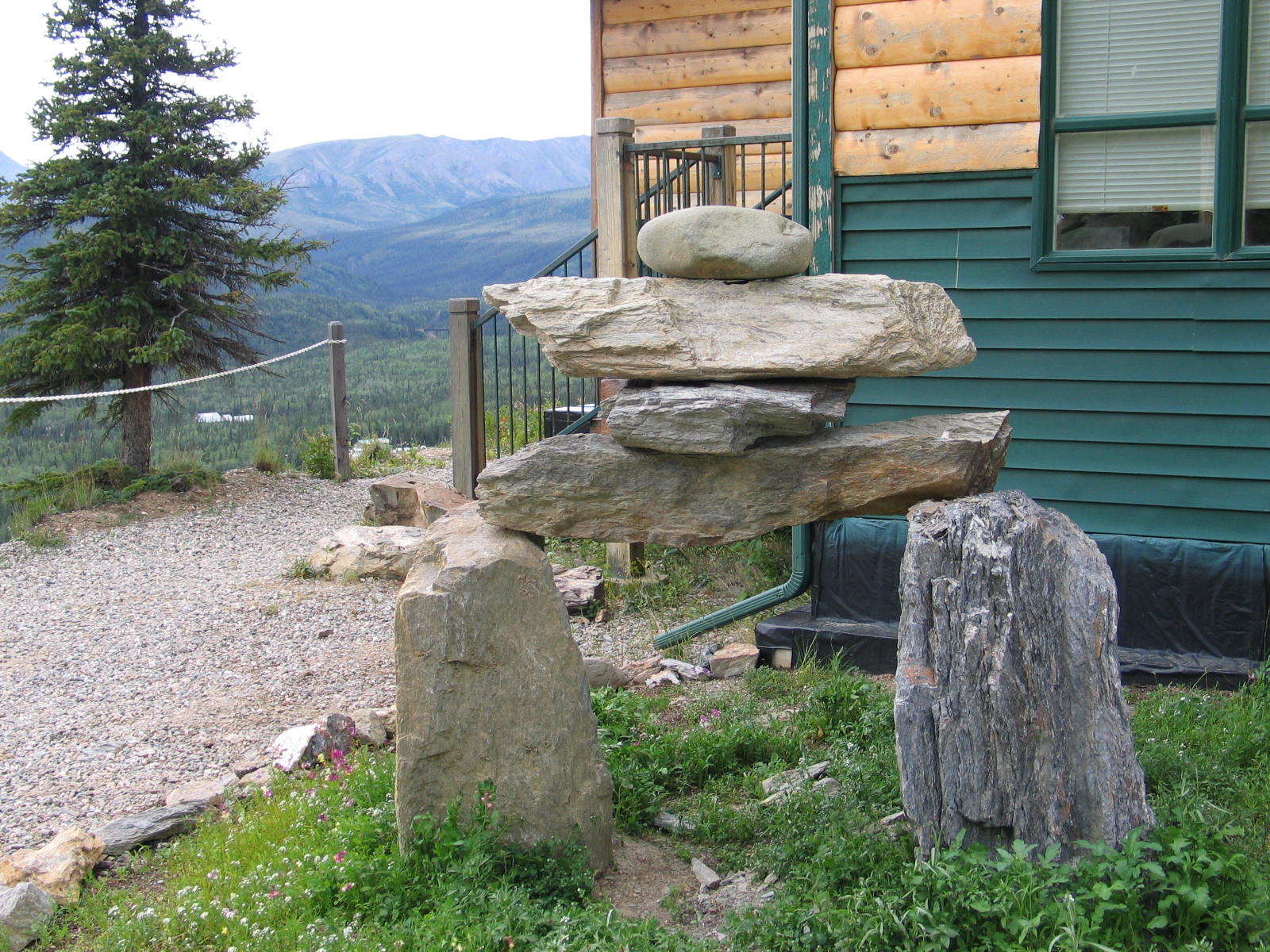 Inukshuk, the singular of inuksuit, means "in the likeness of a human" in the Inuit language. They are monuments made of unworked stones that are used by the Inuit for communication and survival. The traditional meaning of the inukshuk is "Someone was here" or "You are on the right path." We sure did recognize that, we were definitely on the right path.
.jpg) At the end of our dinner, Brad photographed a beautiful valley sunset at 11:00PM. Sunset at Grande Denali (1) When we finally got to bed, as you can imagine we were very tired. It was a long, long day but worth every minute.
At the end of our dinner, Brad photographed a beautiful valley sunset at 11:00PM. Sunset at Grande Denali (1) When we finally got to bed, as you can imagine we were very tired. It was a long, long day but worth every minute.Would we do Denali again?
YOU BETTER BELIEVE IT, IN A HEARTBEAT!!


.jpg)


